
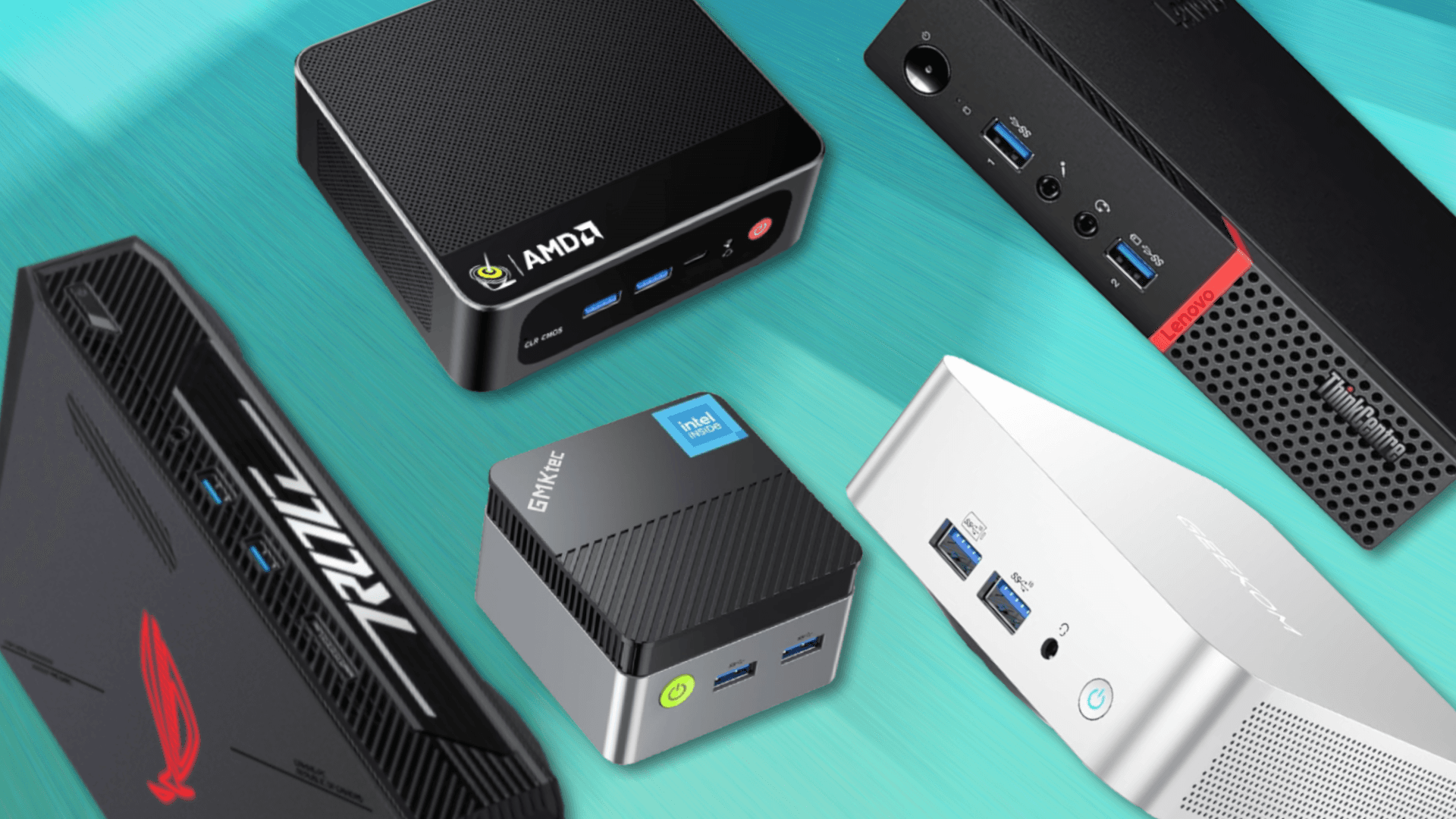
The mini PC market is experiencing significant growth in July 2026, with leading manufacturers like GMKtec, Kamrui, and GEEKOM offering compelling deals on compact systems. These small form factor computers, powered by both Intel and AMD processors, are proving to be versatile solutions for professionals, gamers, and home users seeking high performance, energy efficiency, and space-saving designs.
Compact Computing Gains Momentum
The demand for mini PCs continues to rise, driven by their ability to deliver robust computing power in a significantly smaller footprint than traditional desktop towers. As of July 5, 2026, a curated selection of top Intel and AMD mini PCs highlights options for various needs, from intensive gaming to everyday productivity and home office setups.
Market Dynamics and Key Innovations
The mini PC market is projected to reach $25.9 billion in 2026, growing at a Compound Annual Growth Rate (CAGR) of 6.6% through 2035. Intel processors currently hold a dominant market share, recognized for their reliability and consistent performance. However, AMD processors are rapidly gaining traction, appealing to consumers with their superior multi-core performance and cost-effectiveness. Modern mini PCs often feature advanced components such as DDR5 (Double Data Rate 5) RAM (Random Access Memory), NVMe (Non-Volatile Memory Express) SSDs (Solid State Drives), and robust integrated graphics, making them capable alternatives to larger systems.
Featured Mini PC Selections
Leading brands are showcasing a range of mini PCs, each tailored for specific user requirements. These devices emphasize a balance of specifications, overall design, user feedback, and value, ensuring that both performance and affordability are prioritized.
- GMKtec M6 Ultra (AMD): This model features the AMD Ryzen 5 7640HS processor, a 6-core, 12-thread chip manufactured on a 4nm process, capable of boosting up to 5.0 GHz. It includes AMD Radeon 760M integrated graphics, which supports casual gaming and lighter graphics tasks. The M6 Ultra supports up to 128 GB of DDR5 4800 MT/s RAM and offers dual M.2 2280 NVMe SSD slots. Connectivity is comprehensive, with dual 2.5 Gigabit Ethernet (GbE) LAN, Wi-Fi 6E, Bluetooth 5.2, and USB4.0 with DisplayPort Alt Mode.
- Kamrui E3B (AMD): The Kamrui E3B often comes equipped with an AMD Ryzen 7 7730U processor, an 8-core, 16-thread unit with a max boost clock of up to 4.5 GHz, based on Zen 3+ architecture. Some configurations may feature the AMD Ryzen Embedded V2748, also an 8-core, 16-thread processor. It typically includes 16GB or 32GB of LPDDR4X or LPDDR5 RAM and a 512GB SSD, supporting triple 4K display output. This mini PC is lauded for its cost-effectiveness and quiet operation, making it suitable for office tasks and multi-screen workflows.
- Kamrui Pinova P1 (AMD): Powered by an AMD Ryzen Embedded R2544 processor, a quad-core, eight-thread CPU (Central Processing Unit) with speeds up to 3.7 GHz, the Pinova P1 is designed for everyday multitasking and light video editing. It usually includes 16GB of DDR4 RAM and a 512GB NVMe M.2 SSD, with expandability up to 32GB RAM and 4TB storage via an additional 2.5-inch SATA HDD bay. A notable feature is its support for triple display output, often through two HDMI 2.0 ports and a VGA port.
- GMKtec M2 Pro S (Intel): This Intel-based option features an 11th Gen Intel Core i7-1185G7 processor, a quad-core, eight-thread chip with a turbo frequency of 4.8 GHz. It integrates Intel Iris Xe Graphics G7, capable of handling 4K video, creative work, and casual gaming. Configurations typically include 16GB DDR4 RAM, expandable to 64GB, and a 512GB NVMe M.2 SSD. The M2 Pro S supports triple 4K UHD display output and offers extensive connectivity, including USB4.0 and 2.5G Ethernet.
- Kamrui Hyper H2 (Intel): The Hyper H2 is available with various Intel processors, including the Intel Core i5-14450HX or the Intel Core i9-11900H, offering significant processing power for demanding multitasking and creative workloads. It commonly ships with 32GB of DDR4 RAM and a 1TB NVMe PCIe 4.0 SSD, making it a strong contender for productivity users and media centers. The system supports triple 4K displays via HDMI, DisplayPort, and USB-C.
- GEEKOM Air12 (Intel): Positioned as an entry-level mini PC, the GEEKOM Air12 comes with processors such as the Intel Pentium Gold 7505 or the 12th Gen Intel N100/13th Gen Intel N150. It typically includes 8GB or 16GB of DDR4 or DDR5 RAM and a 512GB NVMe SSD. The Air12 is praised for its compact design, versatile connectivity, and triple 4K display output, with some versions supporting up to 8K. It is an ideal choice for office work, browsing, and video conferencing.
What This Means
The current landscape of mini PCs offers unprecedented choice and value for professionals and enthusiasts. These compact systems are no longer niche products; they are robust computing solutions that can serve as primary workstations, dedicated gaming rigs, or efficient home media centers. The emphasis on high-speed RAM, NVMe storage, and advanced integrated graphics means users can expect snappy performance for a wide array of tasks. Furthermore, extensive connectivity options, including multiple display outputs and fast networking, enable flexible and clutter-free setups, crucial for modern hybrid work environments and multi-monitor configurations. For those considering a purchase, understanding the specific processor generation and integrated graphics capabilities is key to matching a mini PC with intended use, ensuring optimal performance without overspending on unnecessary features. For more insights into choosing the right compact system, consult resources like Intel's guide on processors.
Key Points
- The mini PC market is projected to reach $25.9 billion in 2026, indicating strong growth.
- Leading mini PC models from GMKtec, Kamrui, and GEEKOM offer a balance of performance and value, with options for both Intel and AMD processors.
- Many modern mini PCs support triple 4K display output, making them highly versatile for productivity and content creation.
- Key components like DDR5 RAM and NVMe SSDs are becoming standard, providing significant speed and efficiency improvements.
- Considerations for purchasing include CPU, RAM, SSD, upgradability, and cooling solutions to match specific user needs.
The Bottom Line
Mini PCs are a compelling option for anyone seeking powerful computing in a compact, energy-efficient package. The latest deals on models from GMKtec, Kamrui, and GEEKOM demonstrate that high performance is accessible across various price points. As technology continues to advance, these small form factor machines are set to become an even more integral part of both professional and personal computing environments, offering a smart alternative to traditional desktops without compromising capability.