
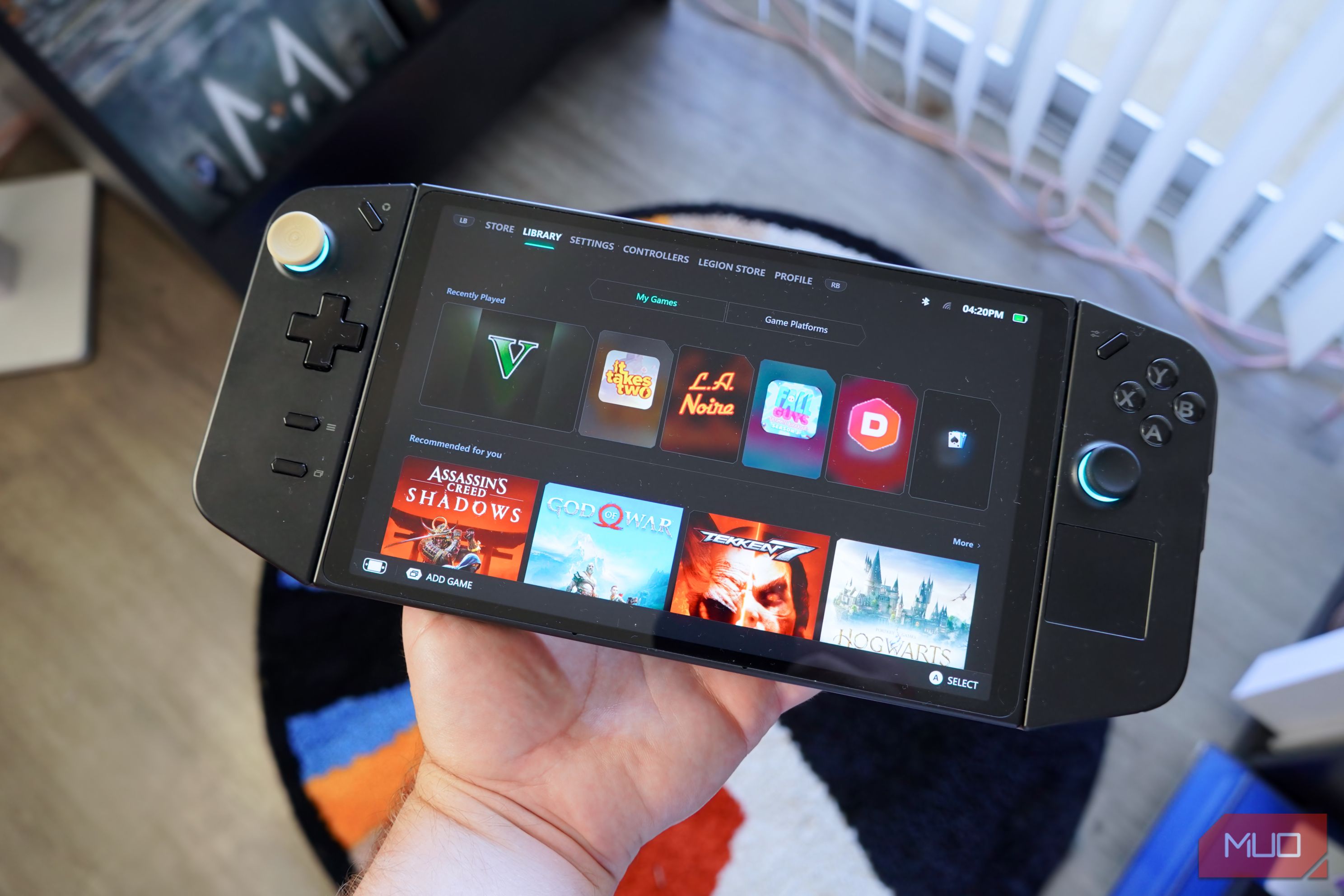
Lenovo's Legion Space application is significantly enhancing the user experience on Windows-based gaming handhelds, offering a console-like interface that rivals Valve's SteamOS. This proprietary launcher, initially overlooked by some users, now serves as a central hub for managing games, customizing settings, and streaming content on devices such as the Lenovo Legion Go, addressing previous software challenges on Windows handhelds.
Elevating the Windows Handheld Experience
For many professionals and tech enthusiasts, the software experience on Windows-powered gaming handhelds has historically been a point of contention, often overshadowed by the streamlined SteamOS on Valve's Steam Deck. However, recent advancements, particularly with Lenovo's Legion Space, are transforming this perception, providing a more integrated and user-friendly interface for portable PC gaming.
Hardware and Software Landscape
While devices like the Steam Deck and Steam Deck OLED utilize AMD's Zen 2-based Accelerated Processing Units (APUs) built on a 6-nanometer process, newer Windows handhelds such as the Asus ROG Ally and Lenovo Legion Go feature more advanced AMD Ryzen Z1 Extreme processors, leveraging the Zen 4 architecture and a 4-nanometer process. Despite this hardware advantage, Windows 11's desktop-centric design often presented a less optimized experience for handheld use. The Lenovo Legion Go, released in November 2023, boasts an 8.8-inch Quad High-Definition (QHD) IPS display with a 144Hz refresh rate and 16GB of LPDDR5X RAM, offering robust specifications for portable gaming .
Legion Space's Transformative Role
The official Lenovo launcher, Legion Space, has emerged as a crucial application for Windows handheld users, particularly on the Legion Go. It acts as a unified gaming hub, consolidating titles from various platforms including Steam, Xbox Game Pass, Epic Games Store, and cloud gaming services. This integration allows users to launch games directly without navigating the standard Windows 11 desktop, mirroring the console-like simplicity praised in SteamOS.
- Centralized Game Management: Legion Space aggregates game libraries from multiple digital storefronts, simplifying access to a diverse collection of titles.
- Quick Settings Access: A dedicated Quick Menu, accessible via a physical button, provides on-the-fly adjustments for critical settings such as brightness, volume, resolution, and refresh rate, enhancing the user's ability to optimize their gaming experience without interruption.
- Performance Customization: Users can fine-tune performance profiles, including Thermal Design Power (TDP) limits and operating system power modes, to balance performance and battery life.
- Cloud Gaming Integration: The application offers direct links to numerous cloud gaming platforms, expanding the handheld's capabilities beyond locally installed titles.
What This Means
The evolution of software like Legion Space signifies a critical step forward for Windows-based gaming handhelds. While SteamOS is purpose-built for handheld gaming, often delivering superior battery life and smoother performance on comparable hardware, Windows offers unmatched versatility and broader game compatibility, especially for titles with anti-cheat software or those outside the Steam ecosystem. The improvements in launchers like Legion Space mitigate many of the usability drawbacks of Windows 11 on a small screen, providing a more cohesive and enjoyable experience. This development suggests that the gap in user experience between dedicated handheld operating systems and optimized Windows interfaces is narrowing, offering consumers more viable choices in the portable PC gaming market.
Key Points
- Lenovo's Legion Space application provides a console-like interface for Windows gaming handhelds, integrating multiple game launchers and streaming services.
- The Lenovo Legion Go, launched in November 2023, features an 8.8-inch QHD display with a 144Hz refresh rate and an AMD Ryzen Z1 Extreme processor.
- Legion Space includes a Quick Menu for rapid adjustments of display settings, brightness, and performance profiles, enhancing the user experience.
- While SteamOS often offers better battery life and performance on handhelds, Windows 11 provides broader game compatibility and access to various digital storefronts.
- Software advancements like Legion Space are improving the usability of Windows 11 on portable gaming devices, addressing previous interface challenges.
The Bottom Line
The emergence of refined launchers such as Legion Space demonstrates a growing commitment to optimizing the Windows 11 experience for gaming handhelds. This enhanced software layer allows devices like the Lenovo Legion Go to leverage their powerful hardware effectively, offering a compelling alternative to the Steam Deck. As both operating systems continue to evolve, consumers can anticipate an increasingly polished and versatile portable gaming landscape, with Windows handhelds becoming more competitive in terms of user interface and overall experience. For further insights into handheld gaming operating systems, refer to PCMag's review of the Lenovo Legion Go, which discusses its Windows 11 implementation.