
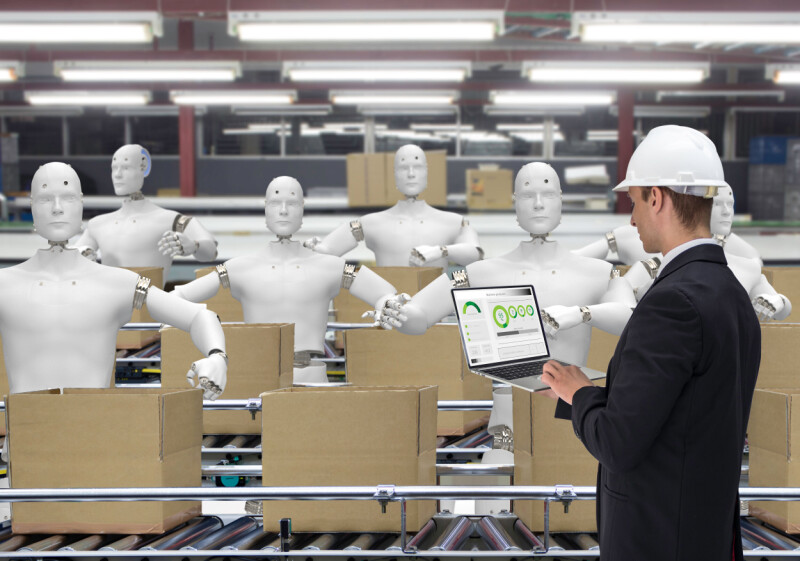
Eric Brandwine, a distinguished engineer and Vice President at Amazon Security, has expressed skepticism regarding the long-standing industry reliance on 'human-in-the-loop' models for artificial intelligence (AI) governance. He argues that human inconsistency and a tendency towards the 'normalization of deviance' can undermine the effectiveness of such systems, advocating for a reevaluation of traditional oversight paradigms as AI systems become more autonomous.
Rethinking AI Oversight
Amazon Security Vice President and Distinguished Engineer Eric Brandwine recently questioned the conventional wisdom of always placing a human in the loop for artificial intelligence (AI) governance. Brandwine highlighted inherent human inconsistencies, suggesting that people are not always the reliable safeguard many assume for complex AI systems.
The Human Element in AI Systems
The concept of 'human-in-the-loop' (HITL) in AI refers to systems where human intelligence provides crucial feedback or intervention to enhance machine learning model accuracy, safety, and ethical alignment. This approach is often employed to address ambiguity, bias, or unusual scenarios that advanced deep learning models might struggle with independently. However, Brandwine, who has served at AWS for over 13 years, suggests that human judgment, while valuable, introduces its own set of variables. Modern large language models (LLMs) and the AI systems built upon them have only been in widespread use for less than a decade, contrasting with millennia of human experience in dealing with human error. For a deeper understanding of HITL, refer to IBM's explanation of the concept.
Normalization of Deviance and AI
A key concern raised by Brandwine is the phenomenon known as the normalization of deviance. This sociological concept, originally coined by American sociologist Diane Vaughan following her analysis of the 1986 Space Shuttle Challenger disaster, describes how deviations from standard procedures can gradually become accepted as normal practice within an organization, particularly when no immediate catastrophic failures occur. Brandwine presented on this topic at AWS's annual re:Invent conference in 2017.
"Humans tend to be a little bit precious about humans. But when you actually get down to it, humans are not terribly consistent." — Eric Brandwine, VP and Distinguished Engineer, Amazon Security
Brandwine elaborated that both humans and AI agents are non-deterministic, meaning neither can guarantee identical outputs given the same input repeatedly. Both are prone to making mistakes, and even generating fabricated information. While humans are accustomed to understanding and managing human failure, this comfort should not automatically elevate 'human-in-the-loop' to the gold standard for AI governance, according to Brandwine.
- Human Inconsistency: Individuals may not always apply rules or make decisions uniformly, leading to varied outcomes.
- Gradual Acceptance of Risk: Over time, minor deviations in human oversight of AI systems could become standard practice if not immediately catastrophic.
- Non-Deterministic Nature: Both human and AI systems can produce different results from identical inputs, making consistent governance challenging.
What This Means
For technology professionals and developers, Brandwine's perspective signals a significant shift in how leading tech companies like Amazon are approaching AI governance. Instead of simply inserting humans into automated workflows, the focus is increasingly on building AI systems with intrinsic safety and governance mechanisms. This implies a greater emphasis on automated validation, robust testing, and transparent AI design from the outset, rather than relying solely on human intervention as a final failsafe. Organizations deploying AI agents into their IT environments must consider these inherent challenges and look beyond simplistic human oversight models to ensure long-term reliability and security. This paradigm encourages a proactive, 'governance by design' approach, integrating responsible AI practices throughout the entire development lifecycle.
Key Points
- Eric Brandwine, Amazon Security VP, questions the effectiveness of 'human-in-the-loop' AI governance due to human inconsistency.
- The concept of normalization of deviance, where unsafe practices become accepted, applies to human oversight in AI.
- Both humans and AI systems are non-deterministic, meaning they cannot guarantee identical outputs from the same input.
- Amazon and AWS are actively developing responsible AI frameworks and tools, including governance by design principles.
- Modern large language models have seen widespread adoption and advanced capabilities emerge within the last decade.
The Bottom Line
The evolving discourse around AI governance, particularly from leaders like Amazon's Eric Brandwine, underscores a critical re-evaluation of traditional oversight models. Organizations must move beyond the assumption that human intervention is always the optimal solution for AI safety and reliability. The future of secure and trustworthy AI likely lies in sophisticated automated governance frameworks, robust testing, and a deep understanding of both machine and human fallibility. Professionals should prioritize integrating responsible AI practices and robust security measures directly into AI system design to navigate the complexities of autonomous agents effectively. More information on Amazon's approach to responsible AI can be found on the AWS Responsible AI page.