
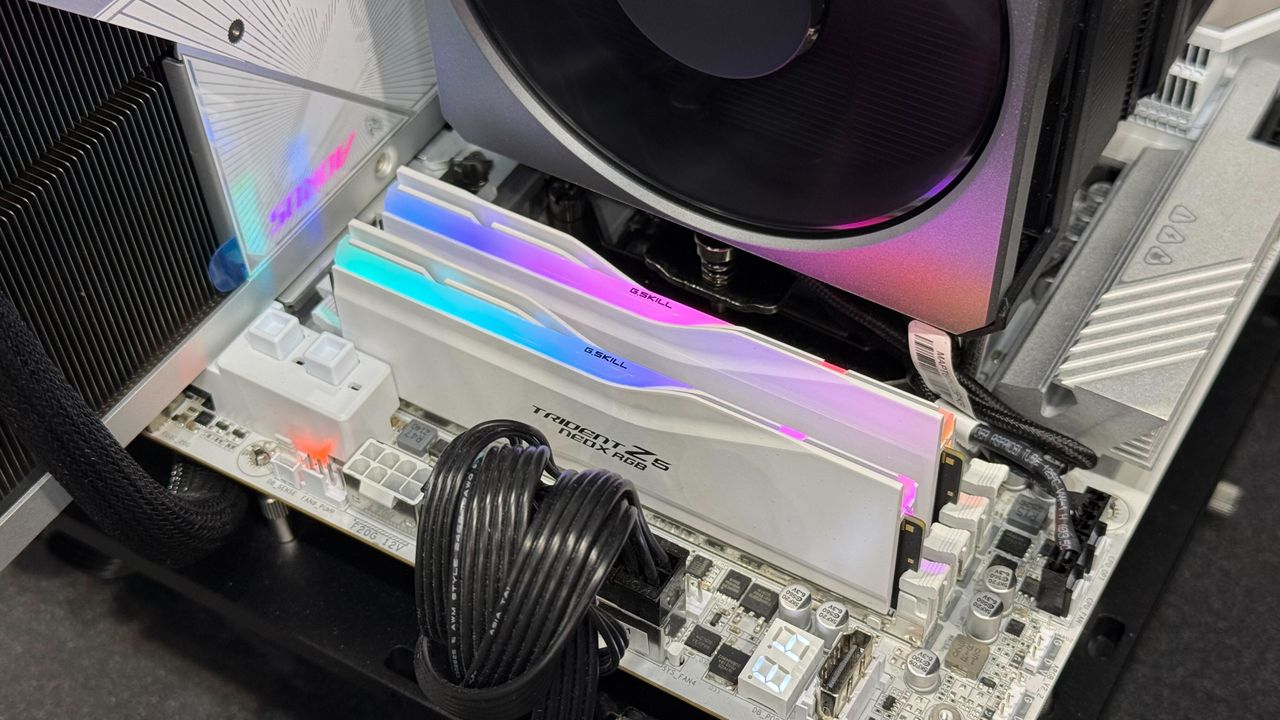
G.Skill's new AMD EXPO Ultra Low Latency (ULL) DDR5 memory kits have arrived on the market, with a 32GB DDR5-6000 C26 kit priced at an unexpected $1,099.99. This retail price represents a significant 168% premium over comparable standard EXPO kits, directly contradicting AMD's earlier assurances that ULL memory would be "effectively the same price" as existing modules.
High Price Tag for Ultra-Low Latency
G.Skill has launched its AMD EXPO Ultra Low Latency (ULL) memory kits, including the Trident Z5 NeoX series, into the retail market. However, the initial pricing has surprised many, with a 32GB (2x16GB) DDR5-6000 C26 kit appearing on Newegg for $1,099.99. This figure stands in stark contrast to previous statements from AMD regarding the cost of this advanced memory technology.
AMD's Promise vs. Market Reality
AMD officially introduced its EXPO ULL technology at Computex 2026, held from May 31 to June 4, 2026, highlighting its potential for enhanced gaming performance. The company claimed that EXPO ULL memory kits would offer a 4% boost in average frames per second (FPS) over standard EXPO modules and a 13% increase compared to JEDEC-standard DDR5 memory. Crucially, David McAfee of AMD had stated that these new ULL DDR5 memory kits should be "effectively the same price" as current kits. For more details on AMD's memory technologies, you can visit the official AMD EXPO Technology page.
G.Skill Trident Z5 NeoX Pricing Details
The G.Skill Trident Z5 NeoX RGB series, designed to leverage AMD's ULL optimizations, is now available through retailers like Newegg. A specific 32GB (2x16GB) DDR5-6000 C26 kit from this series is listed at $1,099.99. When compared to a standard G.Skill Trident Z5 Neo RGB 32GB (2x16GB) DDR5-6000 C26 kit, which currently retails for approximately $409.99 on Newegg, the ULL version carries a substantial 168.5% premium.
"AMD says new EXPO 'Ultra Low Latency' DDR5 memory should be 'effectively the same price' as current kits." — AMD
This significant price difference is attributed to the complex manufacturing processes involved. Memory vendors undertake extensive optimization and meticulous binning to produce chips capable of operating at the tightest timings and lowest voltages required for ULL performance.
- G.Skill's Trident Z5 NeoX series runs at a consistent 1.35V, lower than the 1.40V or 1.45V typically required by the standard Trident Z5 Neo series.
- The ULL technology aims to reduce memory latency by 5-7 nanoseconds compared to traditional DDR5-6000 kits.
- While G.Skill showcased the Trident Z5 NeoX at Computex 2026, official product pages detailing the full range of capacities and speeds are not yet available from the manufacturer.
What This Means
For professionals, developers, and informed tech enthusiasts, the introduction of AMD EXPO ULL memory presents a performance dilemma. While the promise of a 4% average FPS gain over standard EXPO is appealing, the current retail price point of over $1,000 for a 32GB kit forces a serious value assessment. The cost-benefit analysis becomes critical, especially when considering that a complete gaming PC can be assembled for a similar investment. The premium reflects the intensive binning and optimization required for these ultra-low latency modules, pushing manufacturing costs significantly higher. Consumers must weigh whether the marginal performance gains justify such a substantial financial outlay, particularly given AMD's original pricing expectations.
Key Points
- G.Skill's AMD EXPO ULL DDR5-6000 C26 32GB memory kit is available for $1,099.99 on Newegg.
- This ULL kit commands a 168.5% premium over a comparable standard G.Skill Trident Z5 Neo DDR5-6000 C26 32GB kit priced at $409.99.
- AMD previously stated that EXPO ULL memory would be "effectively the same price" as existing kits.
- EXPO ULL promises up to a 4% average FPS improvement over standard EXPO and a 13% improvement over JEDEC DDR5.
- The high cost is attributed to extensive optimization and meticulous binning processes during manufacturing.
The Bottom Line
The debut of AMD EXPO ULL memory at a premium price point of $1,099.99 challenges AMD's initial assurances of comparable pricing. While the technology offers tangible performance benefits, particularly in latency-sensitive applications like gaming, the significant cost may limit its adoption among all but the most dedicated enthusiasts. As more manufacturers release their ULL-compatible kits, the market will reveal whether prices stabilize closer to AMD's original vision or if ultra-low latency remains a high-end luxury. For further technical insights into DDR5 memory, consult DDR5 SDRAM on Wikipedia.