
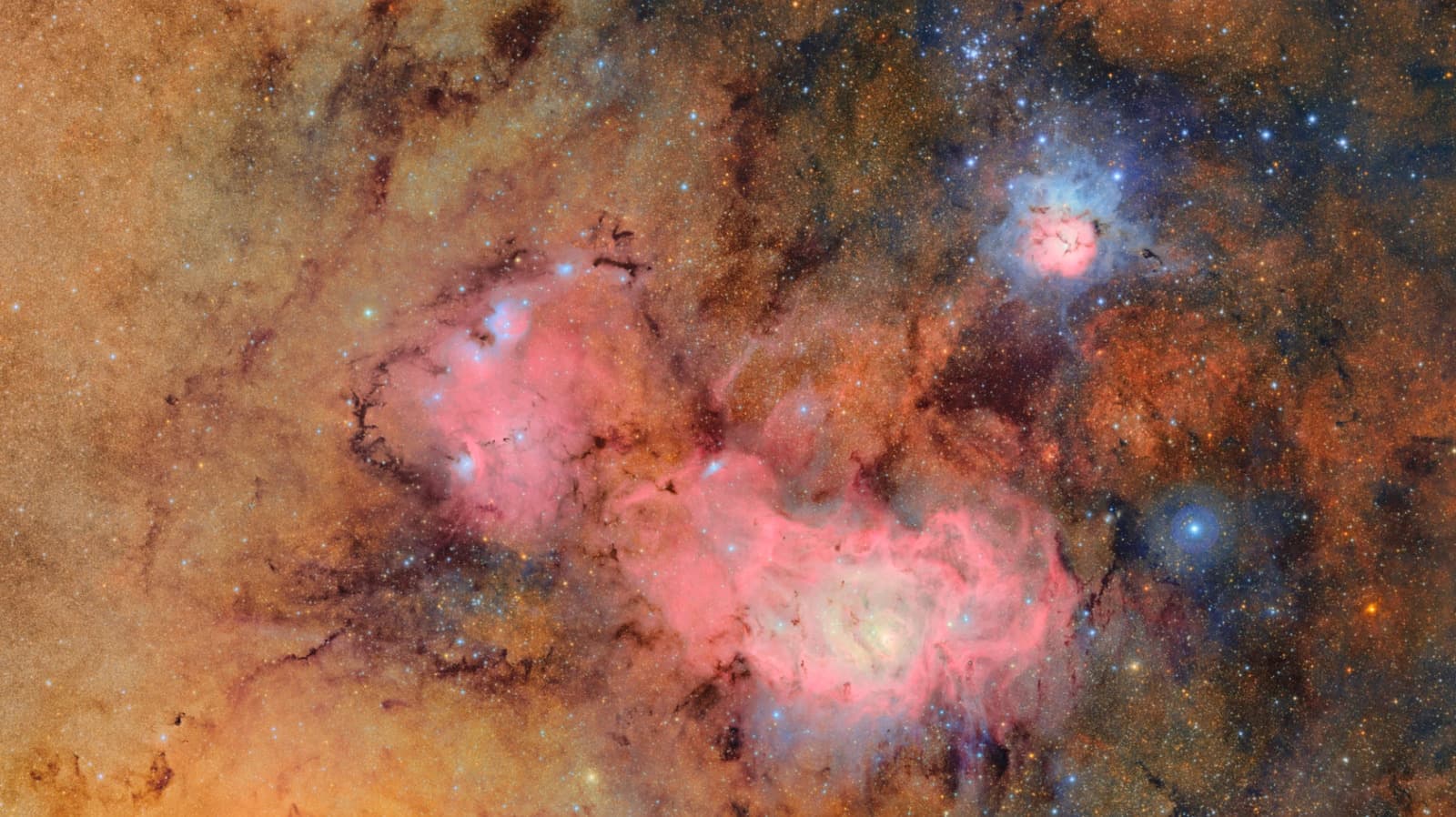
The NSF–DOE Vera C. Rubin Observatory in Chile officially commenced its 10-year Legacy Survey of Space and Time (LSST) on June 30, 2026. This monumental project uses the world's largest 3,200-megapixel digital camera to capture an ultra-high-definition time-lapse of the southern sky, aiming to unravel mysteries like dark energy and dark matter.
A New Era in Cosmic Observation Begins
A groundbreaking decade-long astronomical endeavor, the Legacy Survey of Space and Time (LSST), has officially begun at the NSF–DOE Vera C. Rubin Observatory in Chile. Launched on June 30, 2026, this ambitious project will systematically map the southern sky, creating an unparalleled dynamic record of the universe. The observatory's mission is poised to transform our understanding of cosmic phenomena.
Decades of Preparation Culminate in Historic Survey
The Vera C. Rubin Observatory, situated atop the El Peñon peak of Cerro Pachón in northern Chile, represents over two decades of development and planning. Jointly funded by the U.S. National Science Foundation (NSF) and the U.S. Department of Energy's (DOE) Office of Science, the facility houses the Simonyi Survey Telescope (SST). At the heart of the SST is the LSST Camera, recognized as the largest digital camera ever constructed, boasting an astonishing 3,200 megapixels (3.2 gigapixels). This powerful instrument will capture a new image approximately every 40 seconds, observing the entire southern sky every few nights over the next decade .
Filming the Universe's Grandest Motion Picture
The Legacy Survey of Space and Time is designed to produce an "ultrawide, ultrahigh-definition time-lapse record of the universe". This continuous observation will allow scientists to detect subtle changes and fleeting cosmic events that were previously unobservable. Brian Stone, performing the duties of the NSF Director, emphasized the magnitude of this undertaking.
"Today, we begin filming the greatest cosmic movie ever made." — Brian Stone, Performing the Duties of the NSF Director
The observatory's capabilities were successfully demonstrated during a test run in June 2025, known as the Rubin First Look event, where it captured initial images and identified over 11,000 previously unknown asteroids within its first six weeks of early operations. Over its 10-year operational period, the Rubin Observatory will revisit each point in the sky approximately 800 times. This repeated imaging will generate an immense volume of data.
- The LSST Camera captures images covering an area 45 times the size of the full moon in a single shot.
- Approximately 10 terabytes of data will be collected nightly, amounting to about 30 petabytes of raw image data over the survey's duration.
- The observatory will issue up to 7 million automated alerts per night, signaling changes in the sky within 60 seconds of detection.
What This Means
The Rubin Observatory's LSST represents a significant leap forward in time-domain astronomy. By creating a comprehensive, dynamic map of the southern sky, it will provide an unprecedented dataset for researchers worldwide. This continuous monitoring will enable discoveries across various fields, from identifying potentially hazardous near-Earth asteroids to observing the most distant galaxies. The sheer volume and temporal depth of the data will allow for statistical analyses previously impossible, offering new insights into the fundamental laws governing the universe. The public accessibility of some data through educational platforms will also foster widespread engagement with cosmic exploration .
Key Points
- The NSF–DOE Vera C. Rubin Observatory launched its 10-year Legacy Survey of Space and Time on June 30, 2026.
- The observatory features the 3,200-megapixel LSST Camera, the world's largest digital camera.
- The survey aims to explore dark energy, dark matter, map the Milky Way, and inventory solar system objects.
- It will generate approximately 10 terabytes of data nightly, capturing new images every 40 seconds.
- In a 2025 test run, the observatory discovered over 11,000 previously unknown asteroids.
The Bottom Line
The commencement of the Vera C. Rubin Observatory's Legacy Survey of Space and Time marks a pivotal moment for astrophysics. This decade-long project, powered by the world's largest digital camera, promises to deliver an unparalleled view of our dynamic universe. Scientists anticipate a wealth of discoveries, particularly in understanding the enigmatic nature of dark energy and dark matter, which constitute the majority of the cosmos . The continuous stream of data and real-time alerts will redefine how astronomers study transient events and the evolution of celestial bodies, paving the way for unforeseen breakthroughs in cosmology.