
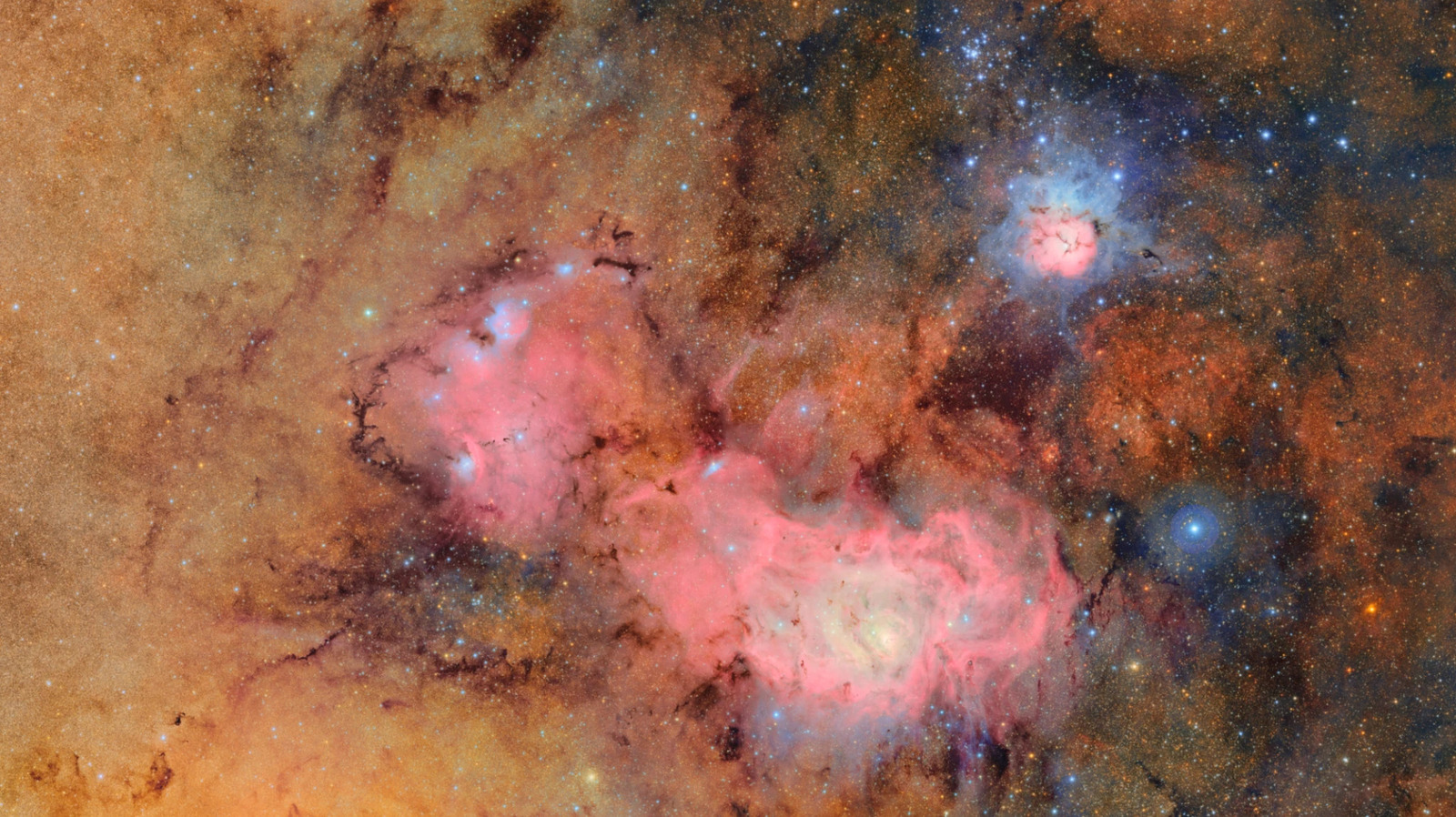
The Vera C. Rubin Observatory in Chile officially commenced its 10-year Legacy Survey of Space and Time (LSST) on June 30, 2026, marking a new era in astronomy. This ambitious project utilizes the world's largest 3,200-megapixel digital camera to capture an ultra-high-definition time-lapse record of the southern sky, aiming to unlock mysteries surrounding dark energy, dark matter, and the evolution of the universe.
Unveiling the Dynamic Universe
The Vera C. Rubin Observatory has initiated its groundbreaking 10-year survey, known as the Legacy Survey of Space and Time (LSST), from its strategic location atop Cerro Pachón in Chile. This monumental effort, more than two decades in the making, promises to revolutionize our understanding of the cosmos by creating an unprecedented cinematic record of celestial events. The observatory's mission is to observe the entire southern sky every few nights, capturing changes and cosmic phenomena with unparalleled detail.
A Monumental Scientific Endeavor
Funded jointly by the U.S. National Science Foundation (NSF) and the U.S. Department of Energy's (DOE) Office of Science, the Rubin Observatory is a collaborative U.S. government facility. It is operated by NSF NOIRLab and DOE's SLAC National Accelerator Laboratory. The observatory houses the Simonyi Survey Telescope, an 8.4-meter wide-field reflecting telescope, paired with the **world's largest digital camera, boasting 3,200 megapixels**. This camera, roughly the size of a small car, was constructed at SLAC National Accelerator Laboratory and shipped to Chile in May 2024, with installation on the telescope completed in March 2025. More information about the observatory's mission and instruments can be found on its official website: rubinobservatory.org.
Filming the 'Greatest Cosmic Movie'
The LSST officially began on June 30, 2026, marking the start of a decade of continuous observation. Over the next ten years, the observatory will capture a new image approximately every 40 seconds, systematically surveying the southern sky. This relentless imaging will allow scientists to revisit each point in the sky about 800 times, meticulously recording changes and cosmic events.
"Today, we begin filming the greatest cosmic movie ever made." — Brian Stone, performing the duties of the NSF Director
The sheer volume of data generated is immense, with Rubin collecting around 10 terabytes of data each night. This data deluge will produce up to 7 million alerts nightly, flagging any celestial objects that have moved, brightened, dimmed, or otherwise changed.
- The observatory's test runs in June 2025 provided a preview of its capabilities, revealing millions of galaxies and stars, alongside thousands of previously unseen asteroids.
- During early optimization surveys, Rubin discovered over 11,000 new asteroids, including 33 near-Earth objects and 380 trans-Neptunian objects.
- The final dataset from the LSST is projected to contain billions of objects and trillions of measurements, offering an unprecedented resource for global scientific research.
What This Means
The initiation of the LSST represents a significant leap forward for cosmology and astrophysics. By continuously monitoring the dynamic universe, the Rubin Observatory will provide critical data to address some of the most profound questions in science. Its vast data collection will enable researchers to map the distribution of dark matter and study the evolution of dark energy, which are thought to comprise 95% of the universe's mass and energy but remain largely mysterious. This comprehensive survey will also enhance our understanding of our own solar system, including the trajectories of potentially hazardous asteroids, and facilitate the discovery of entirely new cosmic phenomena. The public availability of this data will foster new avenues of discovery for scientists and enthusiasts alike.
Key Points
- The Vera C. Rubin Observatory officially launched its 10-year Legacy Survey of Space and Time (LSST) on June 30, 2026.
- Located in Chile, the observatory features the world's largest 3,200-megapixel digital camera.
- The LSST will capture a new image every 40 seconds, observing the entire southern sky every few nights.
- It will generate approximately 10 terabytes of data and up to 7 million alerts nightly, documenting cosmic changes.
- The survey aims to provide crucial insights into dark energy, dark matter, and the expansion of the universe.
The Bottom Line
The Vera C. Rubin Observatory's decade-long Legacy Survey of Space and Time is set to redefine modern astronomy by providing an unparalleled, dynamic view of the cosmos. This continuous monitoring will yield a treasure trove of data, offering scientists worldwide the tools to unravel long-standing mysteries about the universe's fundamental components and its evolution. Researchers anticipate a flood of new discoveries, from detailed maps of dark matter to the identification of previously unknown celestial objects, promising a transformative era for our understanding of space. For more context on the universe's enigmatic forces, explore Dark Energy on Wikipedia.