
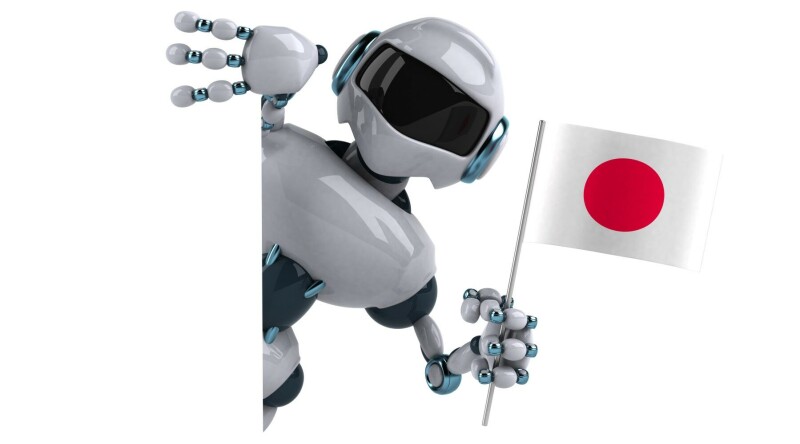
Japan's Ministry of Economy, Trade and Industry (METI) has announced an ambitious national robotics strategy, aiming to deploy 10 million AI-powered robots across 18 sectors by 2040. This initiative, revealed by Minister Ryosei Akazawa, includes significant investment in "physical AI" and seeks to address the nation's severe labor shortages driven by an aging population and restrictive immigration policies.
Japan's Robotics Vision Takes Shape
Japan is set to dramatically expand its robotic workforce, targeting the integration of 10 million artificial intelligence (AI) equipped robots across various industries by the year 2040. This strategic move, announced on June 30, 2026, by Minister for the Economy, Trade and Industry Ryosei Akazawa, underscores the nation's commitment to technological advancement and addressing pressing demographic challenges.
Strategic Investment in Physical AI
The updated national robotics strategy outlines a vision for robots to provide critical support in sectors such as medical care, food and beverage manufacturing, and restaurant services, among a total of 18 fields. To realize this expansive goal, the Japanese government plans to invest up to 1 trillion yen (approximately $6.1 billion USD) over the next five years, through fiscal 2030, specifically targeting the development of AI-powered robots and other forms of physical AI. For the current fiscal year, METI will provide ¥387.3 billion (around $2.4 billion USD) in support. This substantial investment is part of a broader 14-year growth strategy, which earmarks ¥370 trillion (approximately $2.3 trillion USD) in combined public and private investment across 17 strategic industries, including semiconductors and quantum technology. Japan's Ministry of Economy, Trade and Industry plays a central role in guiding these initiatives.
Noetra Consortium Leads AI Development
A key component of this strategy involves a new organization named Noetra, which will lead the development of a homegrown AI model. This consortium, initially formed by industrial giants like SoftBank, NEC, Sony Group, and Honda, is expected to expand its participation to include up to 44 companies across diverse sectors such as automotive, electronics, finance, and logistics. Fujitsu and Rakuten, previously reported as considering involvement, are among the more than 30 major Japanese corporations participating.
"This strategy sets a target of approximately 10 million robots to be deployed by 2040 and, with the addition of the restaurant, food manufacturing and medical sectors, will vigorously promote social implementation across a total of 18 fields." — Ryosei Akazawa, Minister for the Economy, Trade and Industry
Noetra's primary focus will be on "physical AI," which enables robots and other machines to operate autonomously and interact with the real world, moving beyond software-based applications. The consortium aims to develop a 1-trillion-parameter AI model by fiscal 2028, with plans to upgrade it into a multimodal model capable of processing images and audio by 2029. By the early 2030s, the goal is to advance this model to comprehensively handle physical information like weight, temperature, location, and distance.
- The initiative is driven by Japan's unique demographic challenges, including a rapidly aging population and declining birth rates.
- Robots are intended to fill critical labor gaps, particularly in elder care, where the market is projected to reach $780 billion by 2040.
- Japan's existing expertise in robotics, gained from applications in healthcare for the elderly, disaster response, manufacturing, and decommissioning the Fukushima Daiichi Nuclear Power Plant, forms a strong foundation for this new strategy.
What This Means
Japan's aggressive push into AI robotics signifies a proactive approach to national challenges, particularly its demographic shifts. By prioritizing "physical AI," the country aims to leverage its manufacturing prowess and deep industrial data to create practical, real-world solutions. This strategy could position Japan as a global leader in applied robotics, setting a precedent for other nations facing similar workforce issues. The emphasis on a sovereign AI model also reflects a broader geopolitical trend of countries seeking technological independence from dominant foreign platforms.
Key Points
- Japan plans to deploy 10 million AI-equipped robots by 2040 across 18 sectors, including medical care and manufacturing.
- The government will invest up to 1 trillion yen ($6.1 billion USD) over five years in "physical AI" development, with ¥387.3 billion allocated for fiscal 2026.
- A new consortium, Noetra, led by SoftBank, NEC, Sony Group, and Honda, will develop a homegrown AI model, aiming for a 1-trillion-parameter model by fiscal 2028.
- The strategy directly addresses Japan's severe labor shortages caused by its aging population and low birth rates.
- This initiative builds on Japan's extensive experience in robotics for industrial applications, elder care, and disaster response.
The Bottom Line
Japan's updated robotics strategy represents a significant national effort to harness advanced AI and automation for economic resilience and societal well-being. The substantial investment and collaborative industry-government approach through Noetra highlight a determined push to overcome demographic hurdles and establish global leadership in physical AI. Professionals and tech enthusiasts should closely monitor the development of Noetra's AI models and the deployment of these robots, as Japan's innovations could offer a blueprint for other nations grappling with similar challenges in the coming decades.