
Back to Home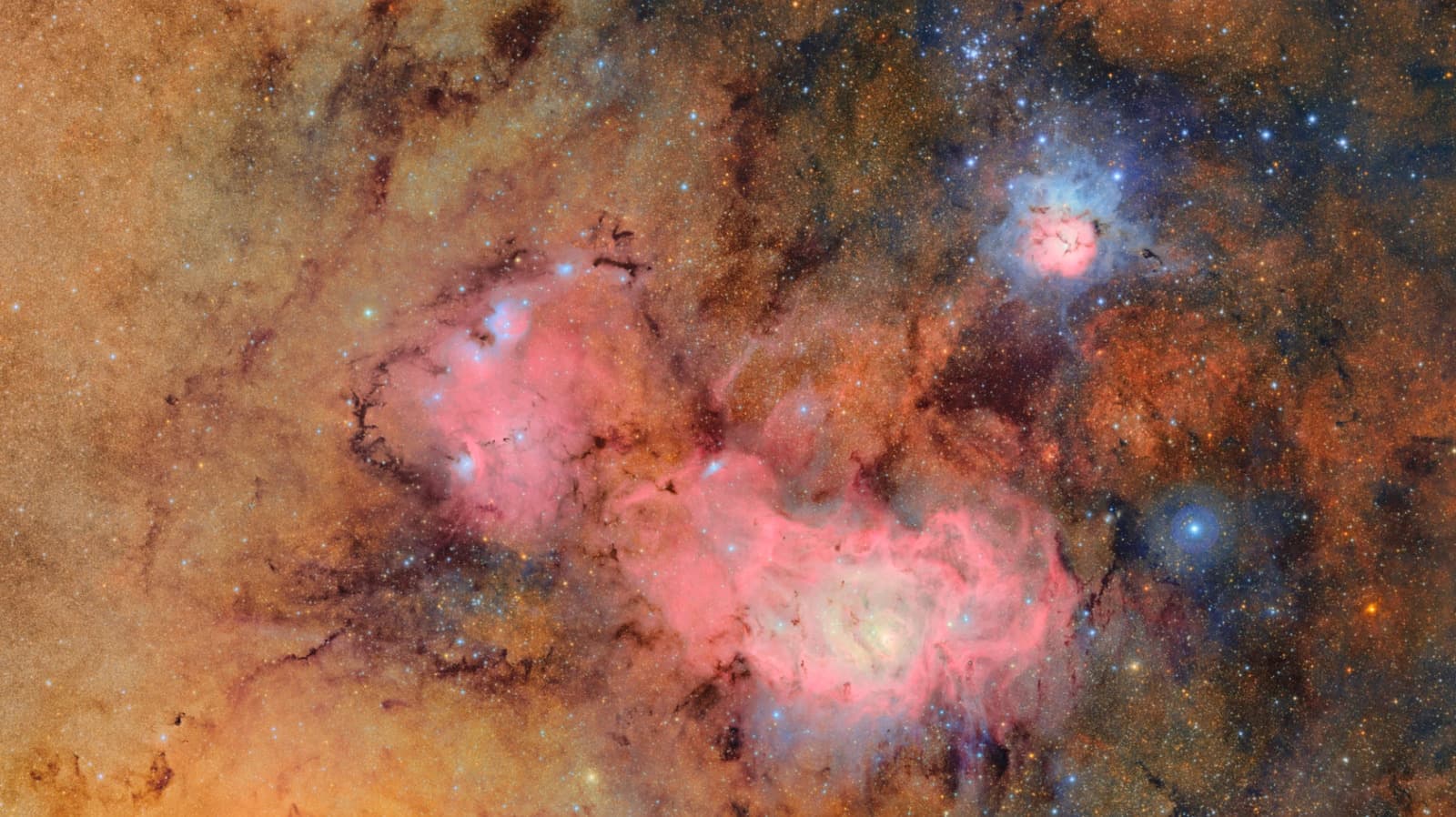
A 10-year sky survey begins filming a 'cosmic movie,' cyborg cockroaches go for a dive and more science stories
T
Techpivo News
·2 min read·0 views
Tomorrow Science A 10-year sky survey begins filming a 'cosmic movie,' cyborg cockroaches go for a dive and more science stories This week’s science news. By Cheyenne MacDonald July 4, 2026 3:45 pm EST NSF–DOE Vera C. Rubin Observatory This week marked the beginning of the Vera C. Rubin Observatory's Legacy Survey of Space and Time, a massive effort to observe the sky that comes more than two decades in the making. It could help us to better understand our own solar system and the mysteries of the cosmos, from dark energy and dark matter to the expansion of the universe. Read on to learn more about that, plus other science news that grabbed our attention this week. The Vera C. Rubin Observatory gets to work The Vera C. Rubin Observatory in Chile, which contains the largest digital camera in the world at 3,200 megapixels, has begun its 10-year survey of the universe. Its campaign kicked off on June 30, and for the next decade it will capture a new image roughly every 40 seconds, observing the entire southern sky every few nights. A press release announcing its commencement said its observations will "create an ultrawide, ultrahigh-definition time-lapse record of the universe." "Today, we begin filming the greatest cosmic movie ever made," Brian Stone of the National Science Foundation said in the announcement. The observatory captured its first images last summer in a test run of its capabilities, producing a remarkable look at millions of galaxies and stars, along with thousands of previously unseen asteroids. Over the course of its decade-long survey, called the Legacy Survey of Space and Time (LSST), it will revisit each point in the sky roughly 800 times, allowing it to record changes and cosmic events. Rubin will take about a thousand images per night, amounting to about ten terabytes of data daily. RubinObs/NSF/DOE/NOIRLab/SLAC/AURA/T. Lange "It is embarking on a mission that will redefine modern cosmology and astrophysics," said Darío Gil, Under Secretary for