
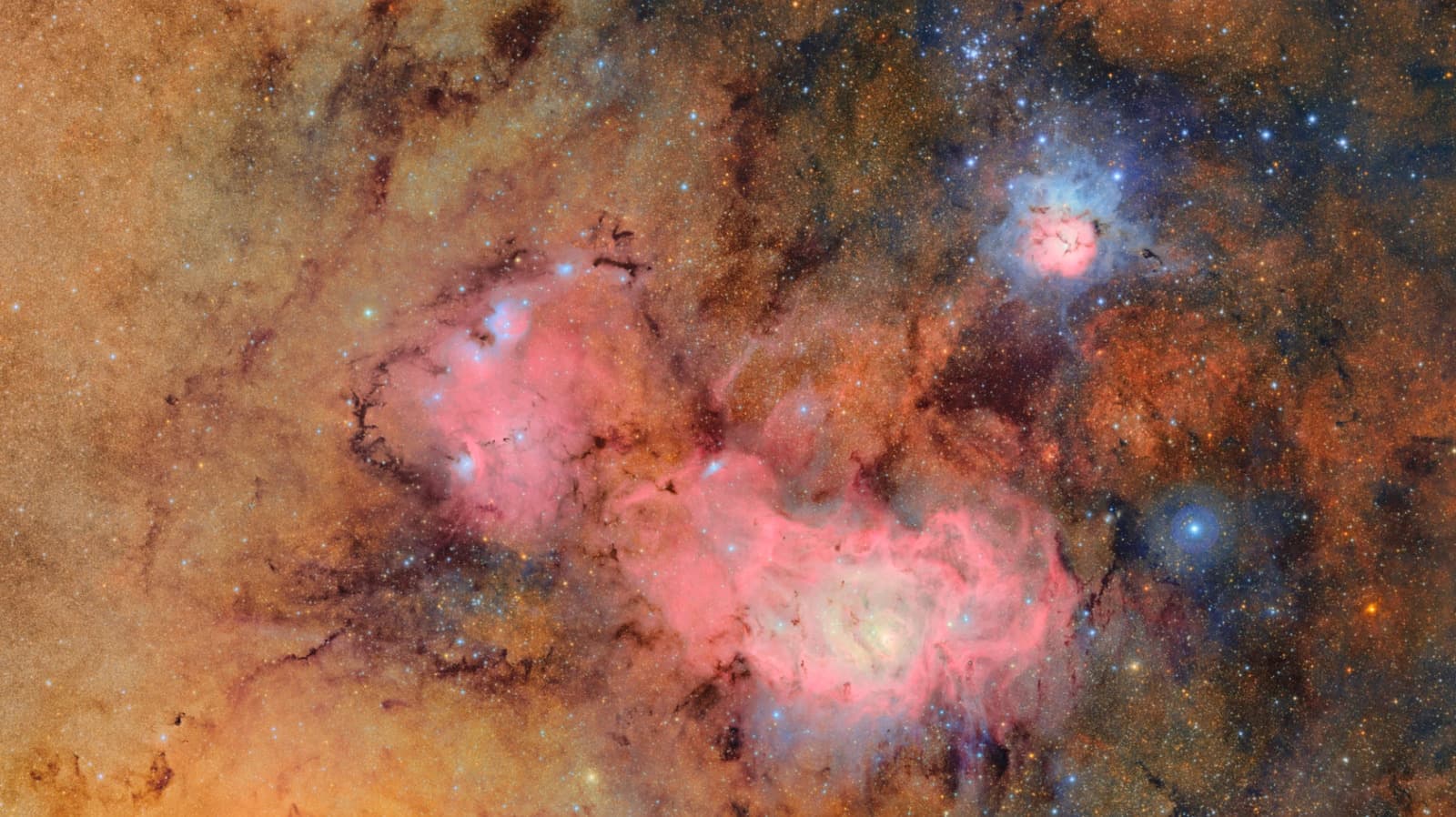
The NSF–DOE Vera C. Rubin Observatory officially launched its Legacy Survey of Space and Time (LSST) on June 30, 2026, commencing a decade-long endeavor to map the southern sky with unprecedented detail. This ambitious project aims to create a comprehensive time-lapse record of the universe, providing critical data to understand dark energy, dark matter, and the evolution of our cosmos.
New Era of Astronomical Discovery Begins
On June 30, 2026, the Vera C. Rubin Observatory in Chile initiated its groundbreaking 10-year Legacy Survey of Space and Time (LSST), marking a significant milestone in astrophysics. This extensive project is set to generate an ultra-high-definition, time-lapse record of the universe, capturing dynamic celestial events and subtle cosmic changes over a decade.
Unprecedented Scope and Technology
The Vera C. Rubin Observatory, jointly funded by the U.S. National Science Foundation (NSF) and the U.S. Department of Energy (DOE), is situated atop Cerro Pachón in Chile. At its core is the 3,200-megapixel LSST Camera, recognized as the largest digital camera ever constructed. This instrument will capture a new image approximately every 40 seconds, systematically observing the entire southern sky every few nights. Over the survey's duration, each celestial point will be revisited about 800 times, allowing scientists to meticulously track cosmic evolution and transient phenomena. For more technical details on the observatory, visit the official Rubin Observatory website.
Filming the Universe's Grand Narrative
The LSST's primary objective is to create an unparalleled "cosmic movie" of the universe, generating approximately 10 terabytes of raw data nightly. This immense dataset is expected to accumulate to about 30 petabytes of raw image data over ten years, with processed data potentially reaching 500 petabytes. The observatory's rapid imaging capabilities will enable the detection of millions of supernovae, billions of stars and galaxies, and thousands of previously uncataloged asteroids.
"Today, we begin filming the greatest cosmic movie ever made." — Brian Stone, Performing the Duties of the NSF Director
This comprehensive survey is designed to address some of the most profound questions in modern astronomy and cosmology, including:
- Understanding Dark Matter and Dark Energy: Investigating the mysterious components that constitute approximately 95% of the universe's mass-energy content.
- Mapping the Milky Way: Creating the most detailed map of our home galaxy, charting billions of stars and their movements.
- Inventorying the Solar System: Identifying and tracking countless asteroids, comets, and other celestial bodies, including potentially hazardous near-Earth objects.
- Exploring the Transient Sky: Detecting fleeting cosmic events like supernova explosions, variable stars, and active black holes, generating millions of real-time alerts for astronomers worldwide.
Darío Gil, Under Secretary for Science at the U.S. Department of Energy, emphasized the mission's transformative potential, stating, "It is embarking on a mission that will redefine modern cosmology and astrophysics.". The observatory's test runs in June 2025 already provided a glimpse of its capabilities, revealing millions of galaxies and thousands of new asteroids.
What This Means
For professionals, developers, and tech enthusiasts, the Rubin Observatory's LSST represents a monumental leap in data science and astronomical research. The sheer volume and velocity of data generated will push the boundaries of data processing, storage, and analysis, requiring innovative solutions in machine learning and artificial intelligence to sift through trillions of measurements and detect anomalies. This project will not only advance our fundamental understanding of the universe but also drive new developments in computational astrophysics and big data infrastructure, potentially leading to unforeseen technological advancements. The open data policy and the Rubin Science Platform will empower a global community of researchers to access and analyze this unprecedented cosmic record, fostering collaborative discovery on a grand scale.
Key Points
- The Vera C. Rubin Observatory initiated its 10-year Legacy Survey of Space and Time on June 30, 2026.
- The observatory utilizes the 3,200-megapixel LSST Camera, the largest digital camera ever built, to image the southern sky.
- LSST aims to gather data on dark matter, dark energy, solar system objects, and transient cosmic events.
- It will generate approximately 10 terabytes of raw data nightly, creating an ultra-high-definition time-lapse of the cosmos.
- The survey is expected to revisit each point in the sky about 800 times over its decade-long operation.
The Bottom Line
The Vera C. Rubin Observatory's Legacy Survey of Space and Time is poised to revolutionize our understanding of the universe by creating the most comprehensive astronomical record to date. This decade-long endeavor, leveraging cutting-edge camera technology and massive data processing capabilities, will provide unprecedented insights into dark matter, dark energy, and the dynamic nature of the cosmos. The scientific community eagerly anticipates the discoveries that will emerge from this cosmic movie, fundamentally reshaping modern cosmology and astrophysics for generations to come.