
NASA's Artemis II mission successfully completed its crewed lunar flyby in April 2026, marking a significant return to deep space exploration. Concurrently, India's Skyroot Aerospace is preparing for the maiden orbital launch of its Vikram-1 rocket in July or August 2026, signaling a new era for private space ventures. These developments highlight the increasing global participation and commercialization of space.
Global Space Sector Sees Key Developments
The global space industry has witnessed a period of intense activity, highlighted by the successful conclusion of NASA's Artemis II mission and the impending maiden orbital flight from an Indian private company. These developments underscore a dynamic landscape driven by both national space agencies and commercial innovators, pushing the boundaries of exploration and access to space.
NASA's Ambitious Programs Progress
The National Aeronautics and Space Administration (NASA) achieved a major milestone with the successful completion of its Artemis II mission on April 10, 2026. This crewed lunar flyby, which launched on April 1, 2026, sent astronauts Christina Koch, Victor Glover, Reid Wiseman, and Jeremy Hansen around the Moon, marking humanity's farthest journey into space since the Apollo era. The mission was a crucial test flight for future lunar landings. Additionally, NASA's Nancy Grace Roman Space Telescope, designed to explore dark energy and exoplanets, is now officially slated for launch on August 30, 2026, aboard a SpaceX Falcon Heavy rocket. This launch date represents an acceleration from previous targets, indicating significant progress in its development. For more details on NASA's lunar exploration efforts, visit the official Artemis II mission page.
Commercial Space Advances with Rocket Lab and Emerging Players
The commercial space sector continues its rapid expansion, with companies securing significant contracts and preparing for historic launches. Rocket Lab, a leading launch services and space systems company, recently secured contracts from NASA for three dedicated launches using its Electron rocket. These missions, named PolSIR (Polarized Submillimeter Ice-cloud Radiometer) and TSIS-2 (Total and Spectral Solar Irradiance Sensor-2), are scheduled for early to mid-2027 and will support Earth and Sun science. Peter Beck, Rocket Lab founder and Chief Executive Officer, stated that the Electron has become synonymous with reliability and precise orbital accuracy, delivering for NASA missions for almost a decade.
"The countdown to history has begun. What once was a bold dream now stands tall on the launch pad. Vikram-1. India's first private orbital rocket." — Pawan Kumar Chandana, Co-founder and Chief Executive Officer, Skyroot Aerospace
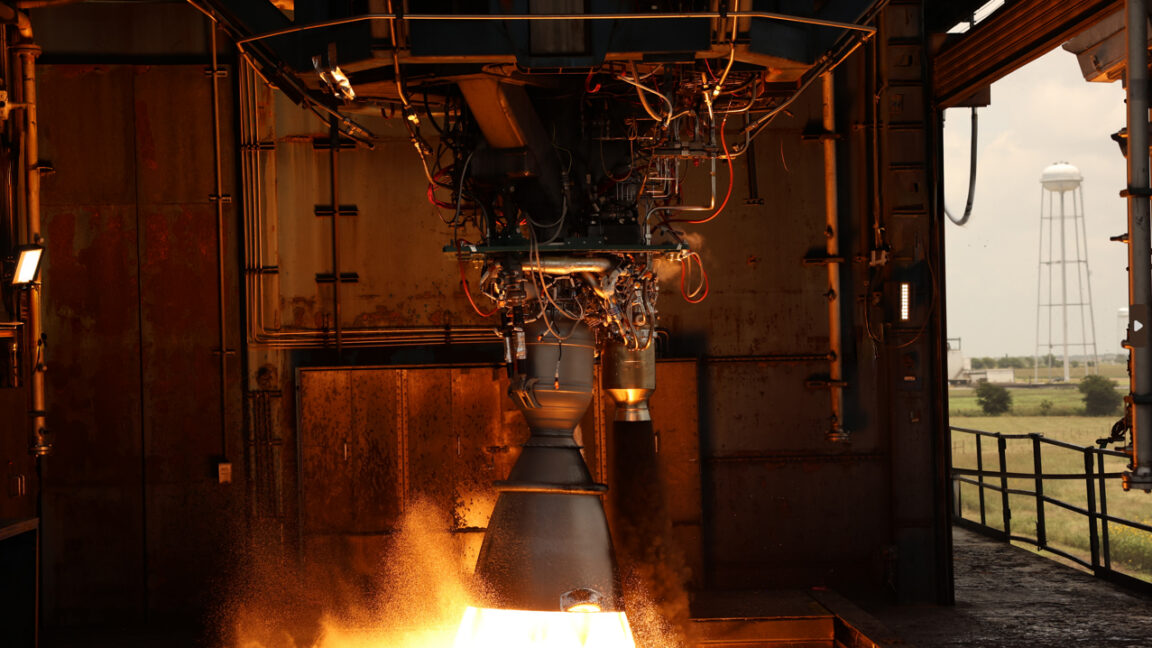
In India, Skyroot Aerospace is poised to make history with the country's first privately developed orbital launch. Its Vikram-1 rocket, designed to carry small satellites weighing up to 350 kilograms to low Earth orbit, is set for its maiden test flight, named Mission Aagaman, between July 12 and August 4, 2026, from the Satish Dhawan Space Centre in Sriharikota. This mission marks a significant step for India's burgeoning private space industry, which aims to capture a larger share of the global space economy. Meanwhile, SpaceX continues its routine operations, including the test-firing of its Merlin 1D engines at its McGregor, Texas, development facility. These powerful engines are critical for powering the company's Falcon 9 and Falcon Heavy rockets. For more information on India's private space sector, visit the Skyroot Aerospace official website.
- Rocket Lab will conduct two back-to-back Electron launches for NASA's PolSIR mission and a third for the TSIS-2 mission, all from Launch Complex 1 in New Zealand.
- Skyroot Aerospace's Vikram-1 rocket, a seven-storey, multi-stage vehicle, will target a 450-kilometer orbit at a 60-degree inclination during its maiden flight.
- SpaceX's McGregor facility is a dedicated cluster of horizontal cells used for the qualification of Merlin 1D and Merlin Vacuum engines.
What This Means
The recent achievements and upcoming milestones underscore a pivotal moment in space exploration and commercialization. The successful completion of Artemis II demonstrates humanity's renewed capability for deep space missions, paving the way for sustained lunar presence. Simultaneously, the emergence of private entities like Skyroot Aerospace in India signifies a broader democratization of space access. This shift allows for increased innovation, competition, and the development of specialized services, from scientific research launches to dedicated small satellite deployments. The continued investment by government agencies in commercial launch providers further solidifies the private sector's integral role in advancing space endeavors.
Key Points
- NASA's Artemis II mission successfully completed its crewed lunar flyby on April 10, 2026.
- The Nancy Grace Roman Space Telescope is now slated for an August 30, 2026, launch.
- Skyroot Aerospace plans India's first private orbital rocket launch (Vikram-1) between July 12 and August 4, 2026.
- Rocket Lab secured three dedicated Electron launch contracts from NASA for PolSIR and TSIS-2 missions in 2027.
- SpaceX continues routine test-firing of its Merlin 1D engines at its McGregor, Texas, facility.
The Bottom Line
The global space sector is rapidly evolving, driven by both ambitious government programs and a burgeoning commercial industry. While major exploration missions like Artemis II push human boundaries, private companies are increasingly providing vital launch services and developing new capabilities. The coming months will see critical orbital debuts from new players and further scientific endeavors, solidifying the commercial space industry's impact on our access to and understanding of the cosmos.